Recent 2026 Employment Law Cases: Small Mistakes, Big Consequences
Recent employment law cases show how easily HR mistakes can lead to costly lawsuits. See how your business can reduce compliance risks.
Discover the unseen financial burdens of employee turnover and learn effective strategies to avoid them. Equip your business for better talent retention.

In today’s competitive business landscape, employee turnover comes with hidden costs that significantly impact an organization’s bottom line. Do you know your own employee turnover rate and the price that comes with it?
These hidden costs can have a significant effect on your organization’s financial health, productivity, and overall performance.
While some turnover is healthy for most organizations, constantly replacing employees has a direct impact to your company's financial stability. It includes more than just the price of hiring and training; you’re also paying in terms of productivity, output, and workplace culture.
If you’re wondering how to calculate your company’s turnover rate, use Stratus HR’s employee turnover calculator for a quick calculation.
Replacing an employee can cost an organization between 50% and 200% of their annual salary when you factor in recruitment, training, and lost productivity (source: SHRM).
Here's a quick overview of the costs of employee turnover:
| Administrative Costs of Turnover | Temporary Staffing Costs of Turnover |
|
|
| Remaining Staff Costs of Turnover | Loss of Institutional Knowledge Costs of Turnover |
|
|
High employee turnover is more than just a statistic; it’s a challenge that can quietly erode an organization’s success. When employees leave at a high rate, the costs of employee turnover quickly add up, impacting everything from your bottom line to team morale. While direct expenses like recruitment and training are easy to spot, the hidden costs of employee turnover are more intangible - things like lost productivity, diminished knowledge, and disruption to workflow - and they can be even more damaging in the long run.
Understanding these hidden turnover costs is crucial for any organization aiming to protect its financial health. Lost productivity, gaps in expertise, and the time it takes for new hires to reach full performance all contribute to the true costs of employee turnover. By recognizing the full impact of turnover, businesses can develop targeted retention strategies that not only save money but also strengthen the organization’s culture and long-term stability.
Training new employees requires substantial time and resources that are invested by both the employee's manager and the organization. This directly impacts the bottom line during any transition period.
Here's a quick breakdown of those hiring costs:
| Recruiting Costs of Turnover | Quality Costs of Turnover |
|
|
| Administrative Costs of Turnover | Training Costs of Turnover |
|
|
| Operational Costs of Turnover | Management Costs of Turnover |
|
|
New employees also require training to reach the productivity levels of their predecessors, and their output may have subpar quality until they are up-to-speed. Other expenses to consider are costs incurred when positions are vacant and need to be temporarily covered.
To keep operations moving, extra shifts may need to be covered by existing employees or a temp agency. If not replaced quickly, your best people may soon be on the brinks of burnout from frustration and overwork.
The effects of employee turnover extend far beyond financial implications; they also permeate the working atmosphere and camaraderie among remaining team members. The frequent departure of colleagues can lower employee engagement and morale, as they grapple with concerns about job security and manage the pressure of an increased workload.
Consequently, this stress and sense of uncertainty can hamper productivity, as the remaining team strives to maintain their usual performance levels under less-than-ideal circumstances.
Customer service and satisfaction can also feel the sting of employee turnover. As employees part ways with the organization, they carry away their unique knowledge and personal rapport built with clients. This sudden void can disrupt the continuity of service, more so if the departing employees had a specialized skill set or deep-rooted connections with specific clients.
Another area of concern is the shadow high turnover creates over the company’s reputation and brand image. If a company is seen as having a high churn rate, it may discourage potential future employees from joining, creating an added hurdle in the talent acquisition process.
On a broader scale, public opinion may also be swayed negatively, with high turnover rates prompting questions about the company’s stability and longevity. This public skepticism can eventually affect customer loyalty, possibly undermining the company’s ability to attract new clients.
As you can see, nurturing a consistent workforce plays a role in more than just the company’s financial well-being. Every team member is a valuable asset, and their stability within the organization is a pillar that supports the company’s successful journey.
There are several proactive strategies your company can implement to minimize unnecessary employee turnover.
What motivates one person may not have the same effect on another. Tailor your strategies to cater to different generations in the workforce.
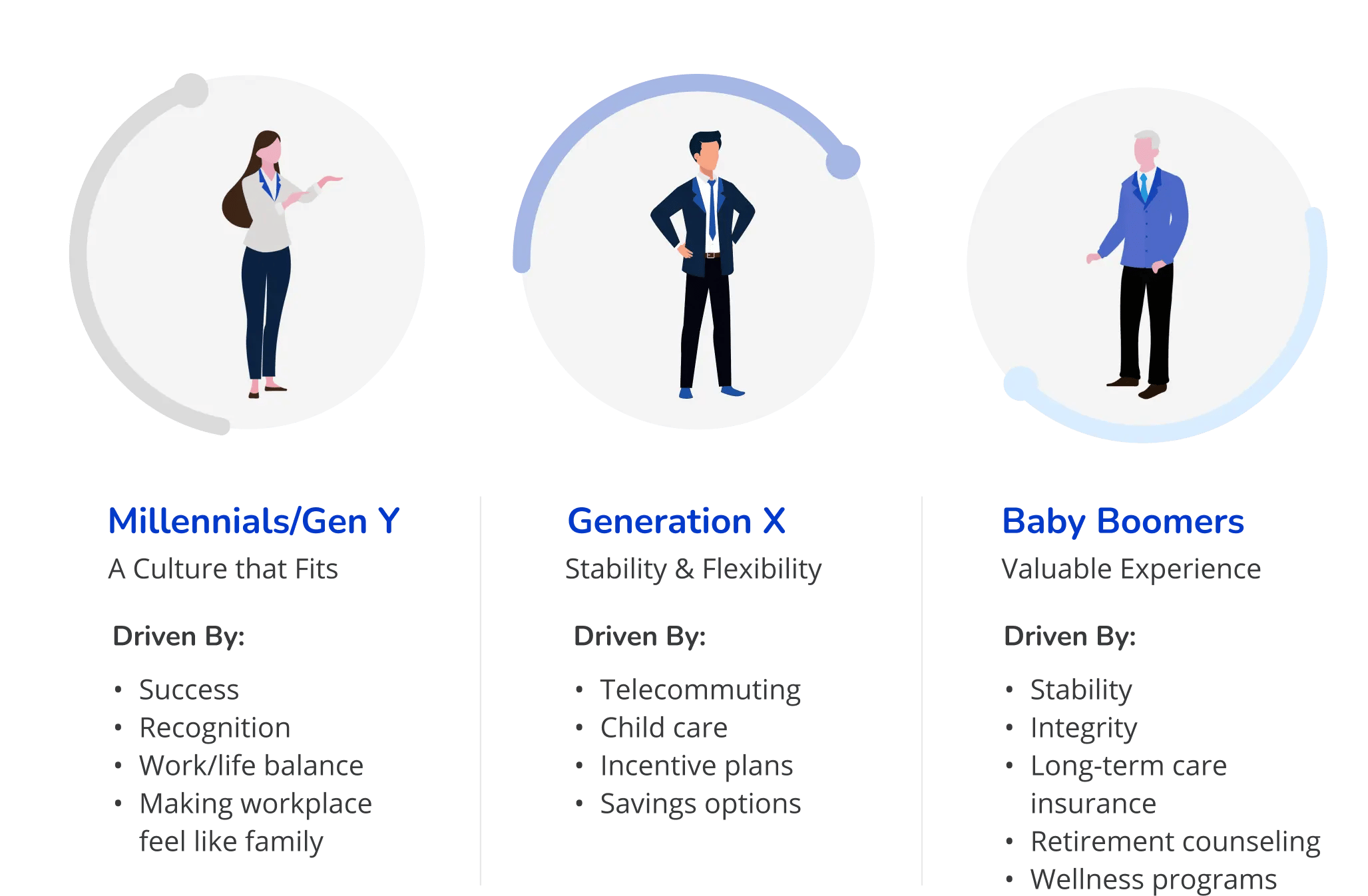
Employee retention is a far better approach than replacing employees who leave. Businesses can combat high turnover by:
Let’s say your high employee retention is directly linked to your HR manager. What happens when that key HR manager leaves your team?
You may see recruitment slow to a snail’s pace as other team members work double time to make up for the open positions. Productivity may also be lost across the organization because positions aren’t filling as fast as you need.
If you could rewind and foresee this HR manager was on the verge of quitting, you would do everything in your power to keep them happy. Although you can be aware of signs that an employee is going to quit, you cannot prevent everyone from leaving.
Because employee turnover affects more than just the open positions, there must be a plan before it becomes a problem.
You should work closely with your human resources team or HR partner to develop the right employee retention strategies for your business. Some of those strategies might include the following:
Repeat this process with each employee on a regular basis, preferably once a year at minimum.
Offering competitive compensation and benefits is important for establishing a solid foundation, but what sets you apart from competing employers?
A positive company culture where employees feel valued and engaged can make a substantial difference in keeping top talent. To help you get there:
By investing in these strategies, your company will build a more resilient and motivated workforce and ultimately reduce the hidden costs of employee turnover.
At Stratus HR, we make sure our clients have the data they need to determine the lifecycle cost of turnover by department and manager. Having a baseline will help you know if your retention plan is making a difference, as well as identify areas that need your focus. For example, if employee turnover is high on a specific team, it might turn out that the rockstar employee you promoted to manager simply needed management training.
We also provide an HR roadmap for each of our clients. This data helps outline their current processes and areas for improvement to provide insight into how their workforce management is affecting their bottom line.
As a business owner, you've already sacrificed a lot to put your business on the map. Do whatever you can to avoid sacrificing your best talent without throwing money at everything. Invest the time to create a good retention plan and partner with a PEO that can help. With the right data and tools at your disposal, you'll be invincible.
For more help with your employee turnover issues, contact your certified HR expert. Not a current Stratus HR client? Book a free consultation and our team will contact you shortly.
Recent employment law cases show how easily HR mistakes can lead to costly lawsuits. See how your business can reduce compliance risks.
All disciplinary action should include documentation that protects your business. See three examples of strong vs. weak documentation.
HR mistakes cost small businesses thousands in fines, lawsuits, and lost employees. Learn the most common HR errors and how to fix them.